Duqm Now Explores Customers Abroad & Suppliers at Home
November 04, 2026
Investors choosing Duqm need a competitive base from which to serve international customers. The plants they establish can become customers themselves, creating demand for Omani businesses able to supply goods and keep production running.
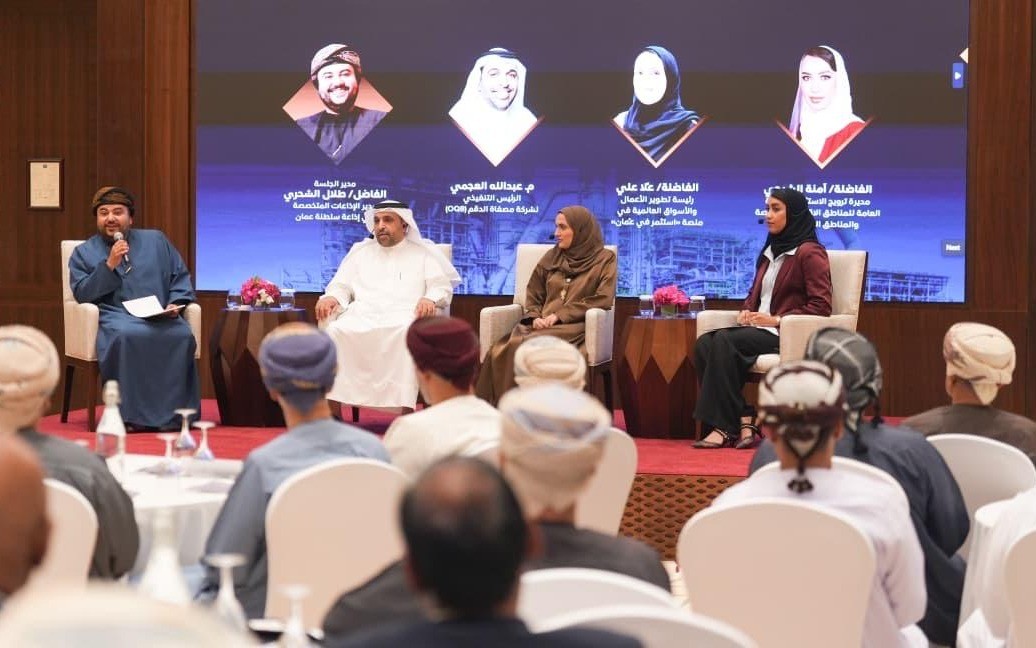
Those investment decisions were the focus of “Duqm Opens”, the Duqm Now session held at Crowne Plaza Hotel Duqm on 4 November. OQ8 CEO Abdullah Al Ajmi, Ulla Ali, Head of Business Development & International Markets at INVEST Oman and Amna Al Sharji, Director, Investment Promotion, OPAZ discussed what investors need to set up and run a business on the Special Economic Zone at Duqm (SEZAD) and how Omani SMEs can win contracts to supply the companies based there.
“An investor wants to know who will pick up the phone when a machine stops working,” said Amna Al Sharji. “An engineering company that can get production moving again has something valuable to offer. We want local businesses to see those opportunities early so they have time to train their people, invest in the right equipment and get the certifications customers require.”
Committed investment on SEZAD stood at RO8.8 billion (US$22.9bn) by June 2026 compared with RO3.6 billion (US$9.4bn) in 2021. The IMF’s October outlook forecasts growth of 4.1% for Oman in 2026 while neighbouring Gulf economies are projected to contract. Merchandise exports increased 17.8% year on year to RO15.9 billion (US$41.4bn) in the first seven months of 2026, according to the National Centre for Statistics & Information.
Carmaker demand for lower-emission steel offers Duqm a route to further export growth. BMW has set a goal to source the majority of its flat steel from lower-carbon production by 2030. Mercedes-Benz has signed for about 50,000 tonnes of low-carbon steel annually from Sweden’s Stegra. Volkswagen’s memorandum of understanding covers potential supplies of up to 300,000 tonnes annually from Jindal Shadeed’s Duqm steel project for its European plants. Using cleaner material reduces the carbon footprint of a car before it leaves the factory.
Food companies are also seeking to cut emissions further back in their supply chains. Norway’s Yara, a major fertiliser producer serving more than 140 markets has signed a binding long-term agreement to buy 100,000 tonnes of renewable ammonia annually from the first phase of ACME’s Duqm development. Ammonia is a raw material for nitrogen-based crop nutrients. The agreement gives ACME a buyer with an established trading and distribution network.
PepsiCo buys potatoes for Lay’s, Walkers and Ruffles. The company attributes more than half of its average potato carbon footprint in Europe to fertiliser production and use. Its separate partnership with Yara provides for up to 165,000 tonnes of lower-emission products annually by 2030, including those made from renewable ammonia to help growers cut emissions.
Serving these markets requires reliable production and delivery. Equipment, utility connections and approvals need to be ready on a coordinated schedule with shipping services suited to the cargo and customer delivery dates. SEZAD’s direct access to the Indian Ocean supports that trade.
OQ8 already supplies overseas customers from Duqm. Kuwait Petroleum International reported earlier this year that the US$9 billion refinery had completed its 500th export shipment with more than 19 million tonnes of refined products shipped worldwide since exports began in 2023.
Keeping a plant running creates demand for supplies and services that SMEs can compete to provide. An operator’s purchasing timetable, quality and safety requirements and likely order volumes help a smaller business decide how much to invest in equipment and staff. Maintenance and repair contracts can provide repeat business long after construction ends while industrial operators gain nearby suppliers they can call on as production expands.
Share:
Latest News
Duqm Forum Explores Sustainability, Compliance and...
November 04, 2026
Duqm Now Explores Customers Abroad & Suppliers at...
November 04, 2026
Six New Projects in Duqm to Strengthen Food Securi...
October 28, 2026
We would like to hear from you